
Gasket Simulation in Abaqus
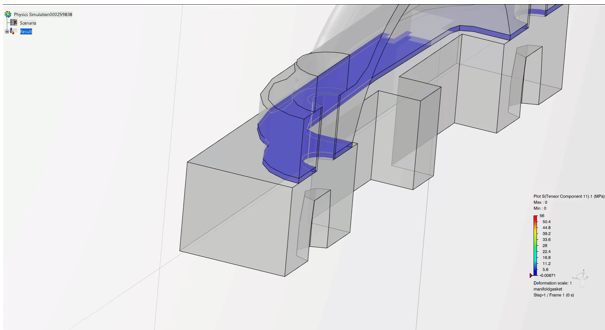
This blog discusses gasket simulation in Abaqus/Standard, focusing on real-world applications. Gaskets provide cost-effective seals between mating surfaces and have applications across various industries By Randy Marlow What is a Gasket? The primary uses of a gasket are to provide a robust seal between two flanges, to endure thermal and mechanical loading, to resist exposure […]
The secret behind smart home product development: platform-based MBSE

Consumers shopping for home products notice the common home products shifting to “smart” products. It has taken some time, but everyday consumer products now use technology from the aerospace and industrial sectors By Ellen Mondro How do manufacturers navigate the complexity of adding integrated sensors, smart chips, networking capability and software to create innovative, reliable […]
Navigating Complexities of Radar Vehicle Integration Leveraging Electromagnetic Simulation

Please welcome guest blogger, Yadhukrishnan MK, of Continental AG as he talks about radar simulation in advanced driver assistance systems By Sophia Eschenfelder Advanced driver assistance systems in automobiles utilize various technologies, such as cameras, lidar, and radar, to ensure a safe and comfortable driving experience. Among these technologies, radar plays a crucial role in […]
Why the High-Tech Industry Needs Multiphysics Simulation
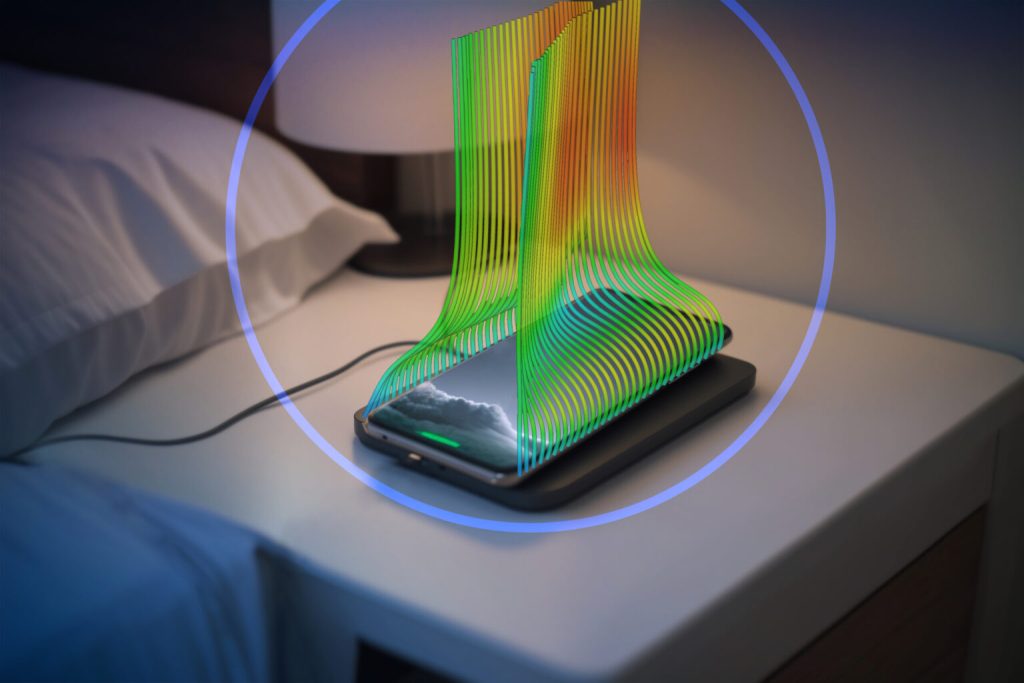
The High-Tech industry is fast-moving and constantly reinventing itself in the face of trends such as wearables, VR/AR, private wireless networks and 5G and the coming 6G. Manufacturers face considerable challenges if they want to stay ahead of these trends and remain competitive. We spoke to several SIMULIA High-Tech industry specialists about the challenges of […]
Optimizing Magnet Design with Melike Abliz of Argonne National Laboratory

SIMULIA is delighted to work with engineering leaders and academics as they leverage simulation capabilities to help shape the future of their industry. We had the opportunity to interview Melike Abliz of Argonne National Laboratory at the 2023 SIMULIA Americas Users Conference to discuss how precise simulation capabilities support innovation as part of the laboratory’s […]
Hypercar vs. F1 Racing Vehicle: Peugeot Interview
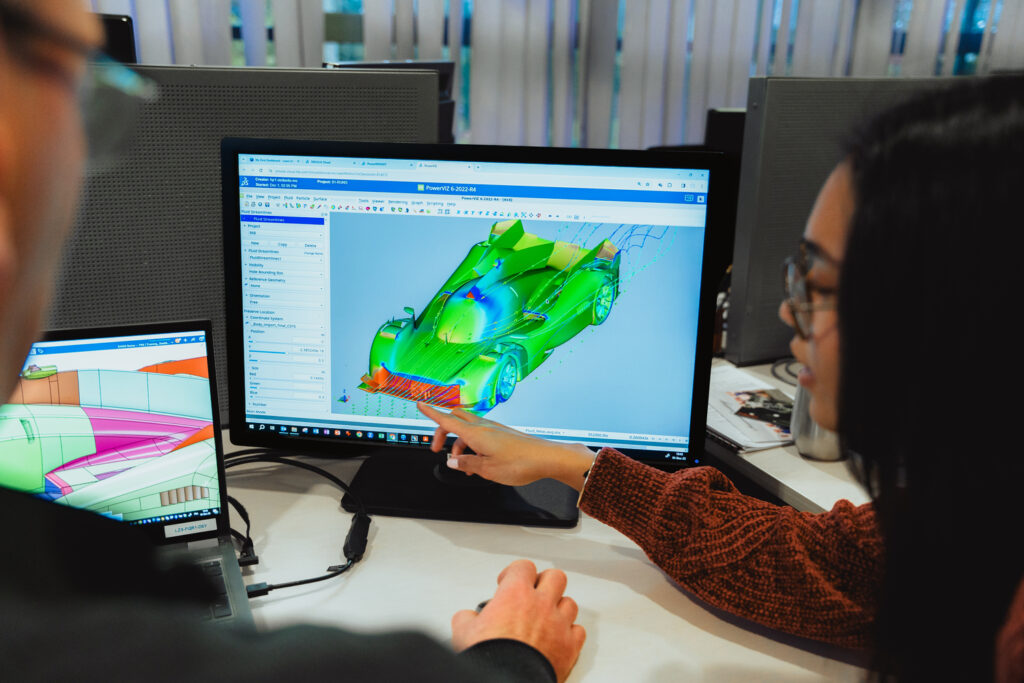
We talk to French automobile company, Peugeot to learn the difference between F1 racing vehicles and the hypercar and how simulation and virtual testing will impact the future of high-speed racing. By Katie Corey Tell us the difference between a hypercar and a standard F1 racing car. The hypercar is designed for endurance racing, unlike […]
Modeling and Simulation of Wind-Assisted Propulsion with the 3DEXPERIENCE Platform

By leveraging wind propulsion-assisted technologies, the maritime industry can address environmental challenges, improve operational efficiency, and contribute to a more sustainable future for global shipping. By Katie Corey Intro In response to the growing need for reduced energy consumption and the imperative to minimize carbon emissions, there has been a surge in the development of […]
Airbus’s Leap Towards Zero-Emission Flight with MBSE

In the dynamic field of aerospace engineering, the integration of Model-Based Systems Engineering (MBSE) and simulation within Airbus Operations SAS is explored through the lens of the Zero-E program, which aims to revolutionize the industry with zero-emission aviation. By Garima DHASMANA n the dynamic field of aerospace engineering, the integration of Model-Based Systems Engineering (MBSE) […]
Using Simulation to Create Unique Antennae with Mark Zakhem
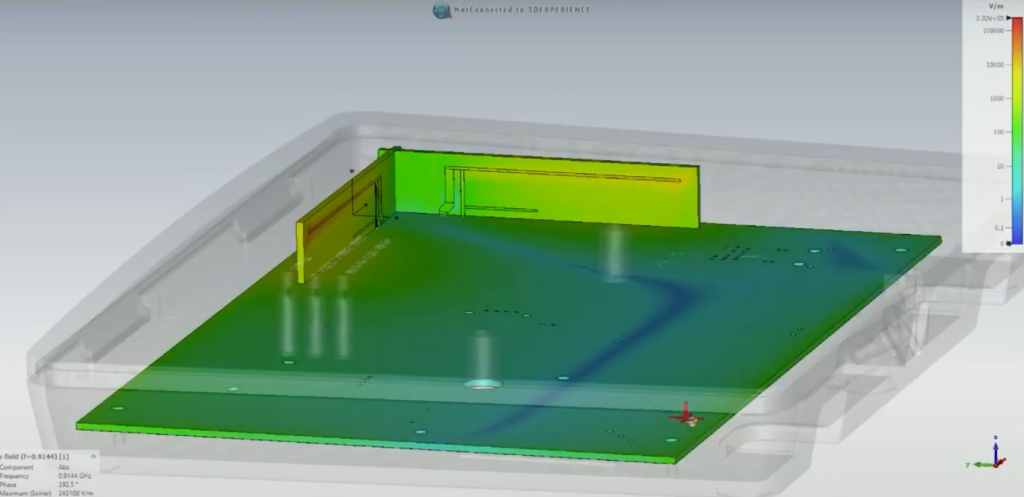
SIMULIA is proud to work with engineering leaders and academics as they leverage simulation capabilities to help shape the future of their industry. At the 2023 SIMULIA Americas Users Conference, we had the opportunity to interview Mark Zakhem of Inovonics and discuss how he uses simulation to create custom-printed antennae. By Katie Corey In an […]
Transonic Flow Simulation in PowerFLOW
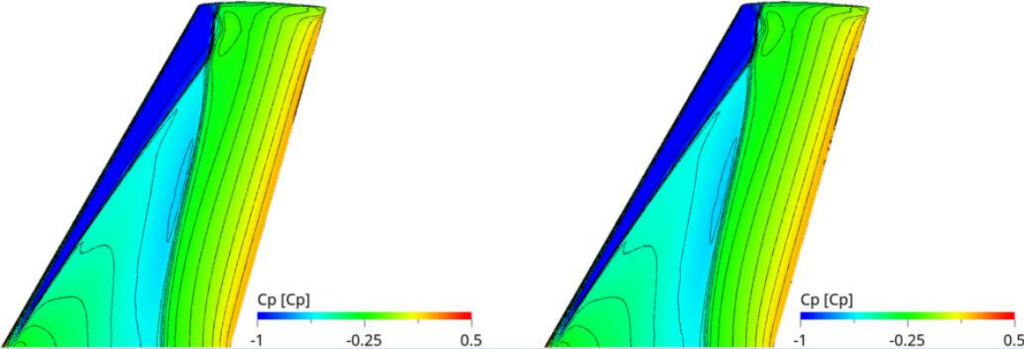
Learn more about the new hybrid simulation method introduced in SIMULIA PowerFLOW that is specially designed for the transonic region By Stephen Jorgenson-Murray Why Does Transonic Flow Require Special Simulation Techniques? In fluid dynamics, the speed of sound in a medium is one of the most important parameters. The speed of sound, Mach 1, marks […]